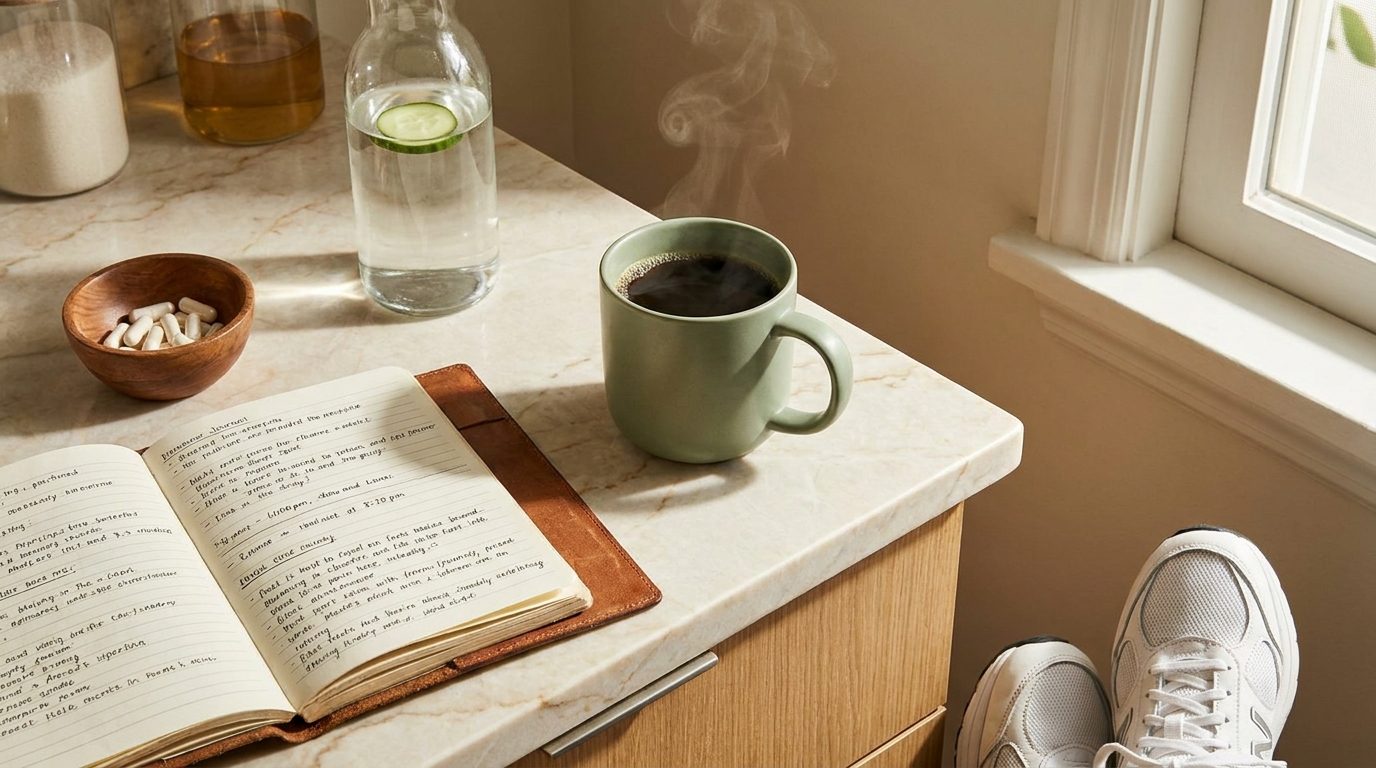
Almost every biohacking article I've read in the last five years assumes you have a private gym, a $4,000 sauna, and three uninterrupted hours every morning to ice-bath, journal, sun-gaze, and meditate before the world starts asking anything of you. I have four children and a teaching job and a husband and a 5am alarm. The protocols below are the ones I actually do — because they are the only ones that survive a real Tuesday.
Three of them cost nothing. Two of them cost less than dinner out. None of them require a device that needs charging.
1. Cold splash on the face and wrists (free, 30 seconds)
The first thing I do after my feet hit the floor. Cold water in the bathroom sink, ten seconds of splashing on the face, ten seconds of running it over my inner wrists where the radial artery sits close to the skin. That's it.
The vagus nerve responds to cold on the face the same way it responds to a cold plunge — by triggering the parasympathetic nervous system to come online quickly. You don't need a $5,000 ice bath. You need thirty seconds of cold tap water on the parts of your body where the cold receptors are densest. The face wins because of the mammalian dive reflex; the inner wrists win because of the surface vasculature.
I notice this most on the mornings I skip it. The mornings I do it, I'm awake by the time I walk into the kitchen. The mornings I don't, the first sip of coffee is doing the work my nervous system should already have done.
2. 4-7-8 breathing in the car line (free, 4 minutes)
Andrew Weil's old protocol. Inhale for 4 seconds, hold for 7, exhale for 8. Repeat four times. The exhale-longer-than-the-inhale is the key — it activates the parasympathetic nervous system and downregulates the stress response within about two cycles.
I do this in the parent pickup line at school every weekday. The car is parked, the engine is off, the radio is off, and for those four minutes I am breathing in a way that resets whatever the day has done to me before I go pick up four kids who all have their own news to share. It works in dentist waiting rooms, in DMV lines, in the five minutes before a meeting starts. Anywhere you'd otherwise be on your phone.
The single biggest discovery of my 30s is that the moments I used to think were wasted — waiting somewhere, sitting in traffic — are the moments my nervous system actually has space to reset, if I let it.
3. A walk in real outdoor light after lunch (free, 10–15 minutes)
This one is the most underrated wellness intervention I've ever found. Ten to fifteen minutes of actual outdoor walking, in actual outdoor light, within the first hour after lunch. Not a treadmill. Not a hallway. Outside.
It does three distinct things at once. It moves food through your stomach so afternoon bloating doesn't happen. It activates muscle glucose uptake so the post-lunch blood sugar spike is blunted (which is most of what creates the 2pm crash). And the outdoor light hitting your retinas locks in your circadian rhythm for the night, which makes the wind-down at 9pm work better.
One walk. Three benefits. Free. Skippable on rainy days but not skippable for the season. I do this around the block at school during lunch break — six minutes out, six minutes back. (The full breakdown of why the post-meal walk fixes afternoon bloating is in the gut health post here.)
4. A small red light desk panel ($30–$40, 10 minutes)
The first paid item on the list and the only one I had to think about before buying. A small red light therapy panel — the kind that's about the size of a paperback book — sits on my desk and gets ten minutes of use during the gap between lunch and afternoon meetings. The cheap ones on Amazon work; I tested two against a clinical-grade $600 panel and the difference was modest. For the ten-minute desk use case, the cheap one is enough.
What it actually does: improves mitochondrial function in the skin and surface tissue exposed to it, which has measurable effects on skin texture, redness, and modest effects on energy and recovery. The research is real, the dose is modest. (Full take on what red light therapy can and can't do is here.) For $35 and ten minutes a day, this earned its spot.
Worth knowing: red light panels do almost nothing at the dose most people use them at. The clinical research uses 10–20 minutes daily, at 6–12 inches from the skin. Stand four feet away and use it for two minutes and you've spent $35 on a tan-colored lamp.
5. Tongue scraping ($5, 15 seconds)
The one most people will roll their eyes at and then quietly try and never go back from. A simple metal tongue scraper, used once in the morning before brushing teeth. Ayurvedic medicine has been doing this for two thousand years. Modern dentistry research caught up about fifteen years ago.
What it does: removes the overnight bacterial coating on the tongue, which is largely responsible for morning breath and is increasingly linked in research to oral microbiome diversity, which is itself linked to systemic inflammation and even cardiovascular health. Five dollars, one-time purchase, lasts forever. Fifteen seconds in the morning.
The first time you use it, you'll be horrified at what comes off. By week two it's just part of your routine and you can't imagine not doing it. I went through every kind of probiotic and oil pulling protocol before discovering that a $5 piece of metal did more for breath and oral health than all of them combined.
The math: total cost, total time
Total monthly cost: under $5 (a tongue scraper that lasts forever, amortized). Total one-time cost: about $40 (red light panel + tongue scraper). Total daily time investment: about 20 minutes spread across the day, none of it requiring a separate appointment with yourself.
Compare that to the influencer biohacking stack of an ice bath ($5,000), a sauna ($3,000), a Theragun ($500), a CGM ($90/month), a personal trainer ($800/month), and the three hours of morning routine they all require. The biohacks above will probably not transform your life. They will, done consistently for a year, move the markers that matter — sleep quality, afternoon energy, skin texture, baseline stress — more than any single $500 device on the internet.
The honest framing
I'm not against the expensive devices. If you have the time and the money for an ice bath setup and you'll use it for the next five years, do it. But the biohacking culture online is dominated by people whose actual job is biohacking, which means they have time available that you don't, and they're selling you a lifestyle that is structurally incompatible with raising four kids and holding down a job.
The protocols above are designed for the actual constraints of a normal woman's life. They are boring, cheap, and undramatic. They also work. That's usually the trade — the things that compound quietly are not the things that get attention online.
Start with one. The cold splash is the easiest place. Add another after two weeks. By the end of summer you'll have all five in the routine and they'll feel like things you've always done.
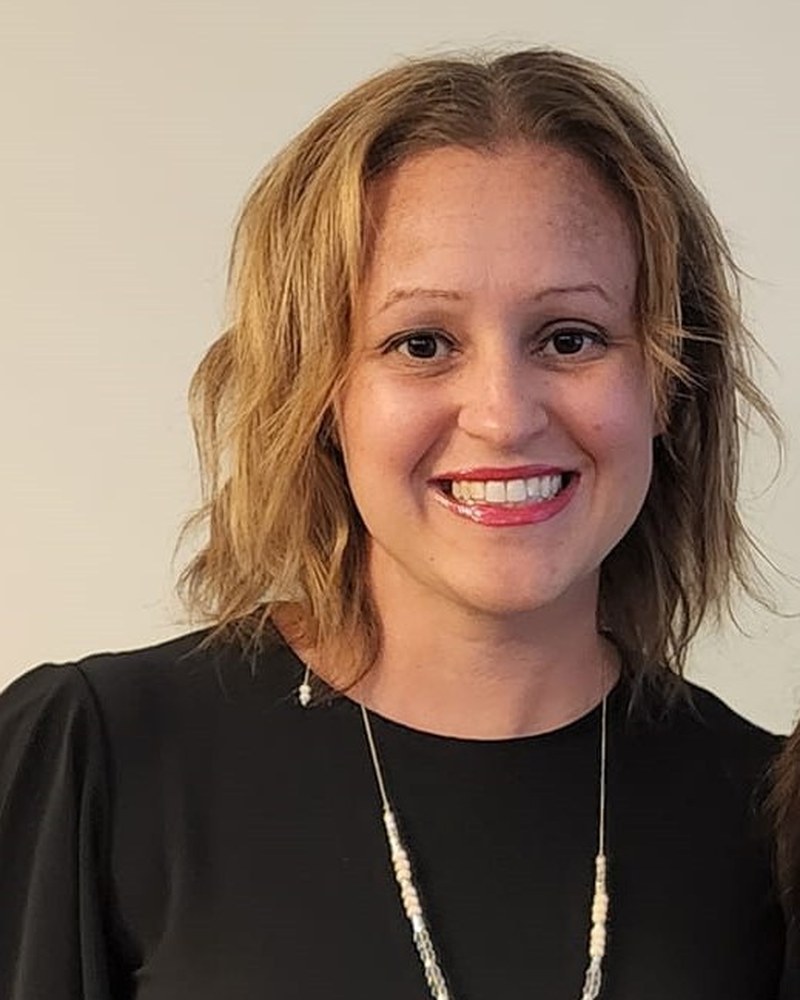
Heather Robles
Mom of four, teacher, and the founder of Wellness by Heather. I write honest, research-backed notes on the wellness products that actually earn a spot in my routine — and the ones that don't.